
Toxic Behaviors in Relationships: 8 Patterns to Recognize

Everyone argues. Everyone forgets things, snaps after a long day, and says something they regret by Thursday. So how do you know when ordinary friction has crossed into something that's hurting you?
Most advice answers with a list of moments: the fight, the cruel comment, the night someone slept in the other room. The better answer is repetition. Toxicity in a relationship is less about any single exchange and more about a set of behaviors that keep happening, that wear down safety and trust, and that leave one person smaller and more careful than they used to be.
What follows are eight toxic behaviors in relationships that I pay attention to clinically, each framed as a pattern rather than a one-off. For each one I'll separate the ordinary version from the repeating version, name the research behind it, and note where ADHD traits like rejection sensitivity, working memory gaps, and emotional flooding can sharpen the dynamic. If you've spent years absorbing criticism, some of this may land harder than you expect. Take it as information, not a verdict.
Table of Contents
1. Chronic Criticism and Contempt - Why contempt lands harder than an ordinary fight
2. Defensiveness and Blame-Shifting - What accountability actually sounds like
3. Stonewalling and Emotional Withdrawal - A pause versus a shutdown
4. Gaslighting and Reality Distortion - How gaslighting works from the inside
5. Emotional Blackmail and Guilt-Based Control - Guilt as information versus guilt as a lever
6. Excessive Monitoring, Jealousy, and Control - Where monitoring crosses a line
7. Intermittent Reinforcement and Love-Bombing Cycles - Why unpredictable warmth is so hard to leave
8. Chronic Invalidation and Minimizing Feelings - Validation doesn't mean agreement
1. Chronic Criticism and Contempt
A complaint names a behavior: "I needed that done today and it didn't happen." Criticism names a person: "You're completely useless." The wording difference looks small on paper. Heard forty times, it stops being a comment and becomes a mirror.
Contempt is criticism with a superiority chaser. It shows up as sarcasm, eye-rolling, mockery, name-calling, or the small sneer that says your opinion isn't worth finishing. John Gottman's couples research identified criticism, contempt, defensiveness, and stonewalling as the four patterns that most reliably predict a relationship's decline, and contempt ranked as the strongest predictor among them.
Why contempt lands harder than an ordinary fight
The CDC's National Intimate Partner and Sexual Violence Survey found that 49.4% of women in the United States, roughly 61.7 million people, had experienced psychological aggression from an intimate partner during their lifetime, a measure that included insults, humiliation, and threats (CDC National Intimate Partner and Sexual Violence Survey). The clinical definition turns on intent: behavior meant to harm a partner emotionally or control them, not just clumsy communication.
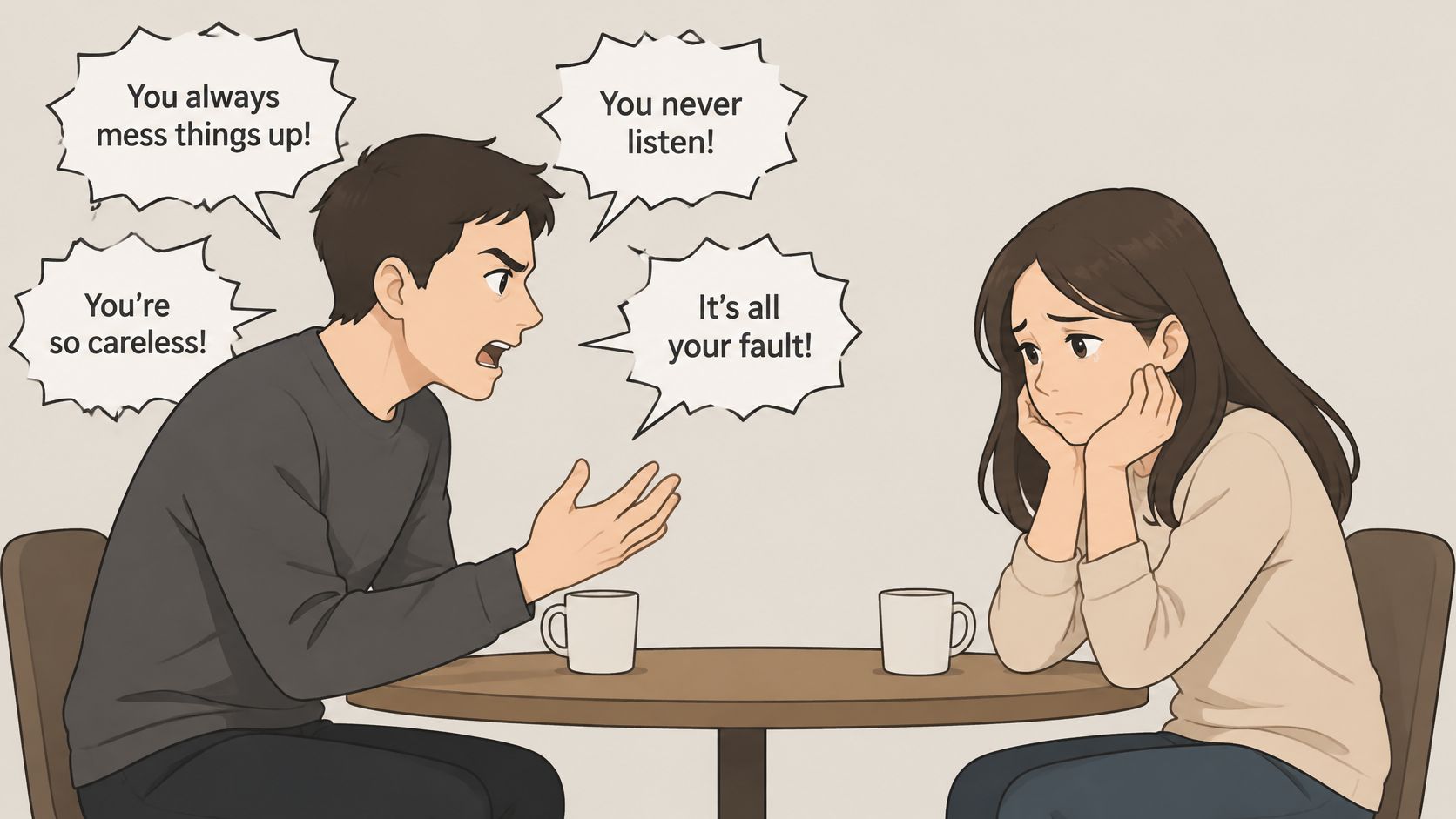
For adults with ADHD, this pattern has extra teeth. Missed errands and forgotten details are real, and a partner's frustration can be fair. The trouble starts when frustration hardens into a character verdict, because rejection sensitivity means each jab arrives at full volume, and forgetfulness hands the critic fresh material every week.
A practical distinction: a complaint points at a situation and asks for something. Contempt points at a person and settles for nothing.
Track the pattern, not the moment. If you're on the receiving end, note what was said and when. Two weeks of notes tells you more than any single argument.
Swap the label for a fact. If this is your pattern, replace "you always" with one observable detail and one request: "The rent check was late and I need it sent Friday."
Say what it costs. "When you call me useless, I stop telling you things" carries further than escalating in the moment.
Bring contempt to a professional. A default tone of mockery is hard to shift alone, and it's worth naming out loud in couples therapy or individual therapy.
2. Defensiveness and Blame-Shifting
Say your partner tells you they were hurt when you canceled plans at the last minute. You could answer, "I hear that. Let me think about what happened." Or you could answer, "Well, you're always on your phone when we're together," and the canceled plans disappear from the conversation entirely.
That second move is defensiveness, and it earned a place among Gottman's four patterns for good reason. Defensiveness treats a concern as an attack, which makes the response about establishing innocence rather than understanding. Blame-shifting goes one step further and relocates the problem: "If you hadn't made such a big deal about money, we wouldn't be fighting."
What accountability actually sounds like
Accountability gets mistaken for agreeing with every accusation. It isn't. It's the willingness to ask which part of the concern is accurate and to say so out loud before offering your side.
In practice, that sounds like three short sentences:
Acknowledge: "I hear that you're upset about Saturday."
Pause: "Give me a minute to think before I explain."
Answer the ask: "I did cancel late. I'll text you earlier next time."
Underneath, defensiveness is usually fear. For ADHD adults, that fear has a track record: years of being told you're unreliable, careless, or not trying. When your partner raises something, your nervous system may hear "here we go again" and reach for an alibi before your brain catches up. The alibi rarely helps, because the other person still doesn't feel heard.
Notice the body first. A tight chest, a rising voice, and the urge to interrupt are early signals, and they arrive before any useful sentence does. Take the breath, then answer the concern.
Accountability isn't accepting every accusation. It's being willing to find the accurate part.
If you're the one being blamed, name the pattern without heat: "I want to talk about the canceled plans, and I notice we keep moving to other topics." Then restate the original point once, calmly. Whether the conversation returns to it tells you a great deal.
3. Stonewalling and Emotional Withdrawal
Stonewalling is the shutdown. The silence, the one-word answers, the person who leaves the room mid-sentence and doesn't come back, the "fine" and "whatever" that end an evening. It reads as indifference from the outside, though it's often the opposite: a nervous system that has hit capacity and has no words left.
Gottman describes stonewalling as a common feature of struggling relationships, and it usually arrives with flooding, the physiological state where heart rate climbs and clear thinking goes offline. Someone who is flooded isn't choosing to punish you. They can't process language well in that moment.
A pause versus a shutdown
The difference is agreement and return. A pause is announced, time-limited, and honored. A shutdown is silent, open-ended, and leaves the other person guessing whether the relationship still exists.
"I'm flooded and can't think straight right now. Can we come back to this in thirty minutes?" Then come back in thirty minutes.
That script works for both people. If you're the one who goes quiet, name the physical state before you go: "My heart is racing and I need to stop." A partner is far more likely to give you space when they know the silence isn't about them.
If your partner is the one who disappears into silence, ask for a specific return time and then leave them alone until it arrives. Pursuing someone mid-flood usually deepens the shutdown and gives them something to defend against later.
What doesn't work is treating every withdrawal as an emergency or every silence as cruelty. Some people need an hour. Some need a walk around the block. The pattern only becomes toxic when withdrawal is the standing answer to every hard conversation and the topic never gets resolved at all, or when silence is used to punish. If the withdrawal comes with persistent anxiety, low mood, or a shrinking life, it's worth exploring with a professional. Chronic shutdown is often a stress response, and stress responses are treatable.
4. Gaslighting and Reality Distortion
Gaslighting is a pattern in which one person repeatedly makes the other doubt their own memory, perception, or judgment. Not once, not in a heated argument, but as a standing method: denying things that plainly happened, re-describing events until you feel irrational, and insisting you're too sensitive when you object.
The name comes from the 1938 play "Gas Light" and its 1944 film version, in which a husband slowly convinces his wife she's losing her mind. Fiction, but the sequence is accurate. Gaslighting works gradually, which is exactly why it's hard to spot from the inside.
How gaslighting works from the inside
Nobody wakes up deciding to distrust their own memory. It accumulates. First you notice you're apologizing more. Then you start keeping texts "just in case." Then you catch yourself rehearsing a version of events before bringing something up, because you're not sure you'll be believed.
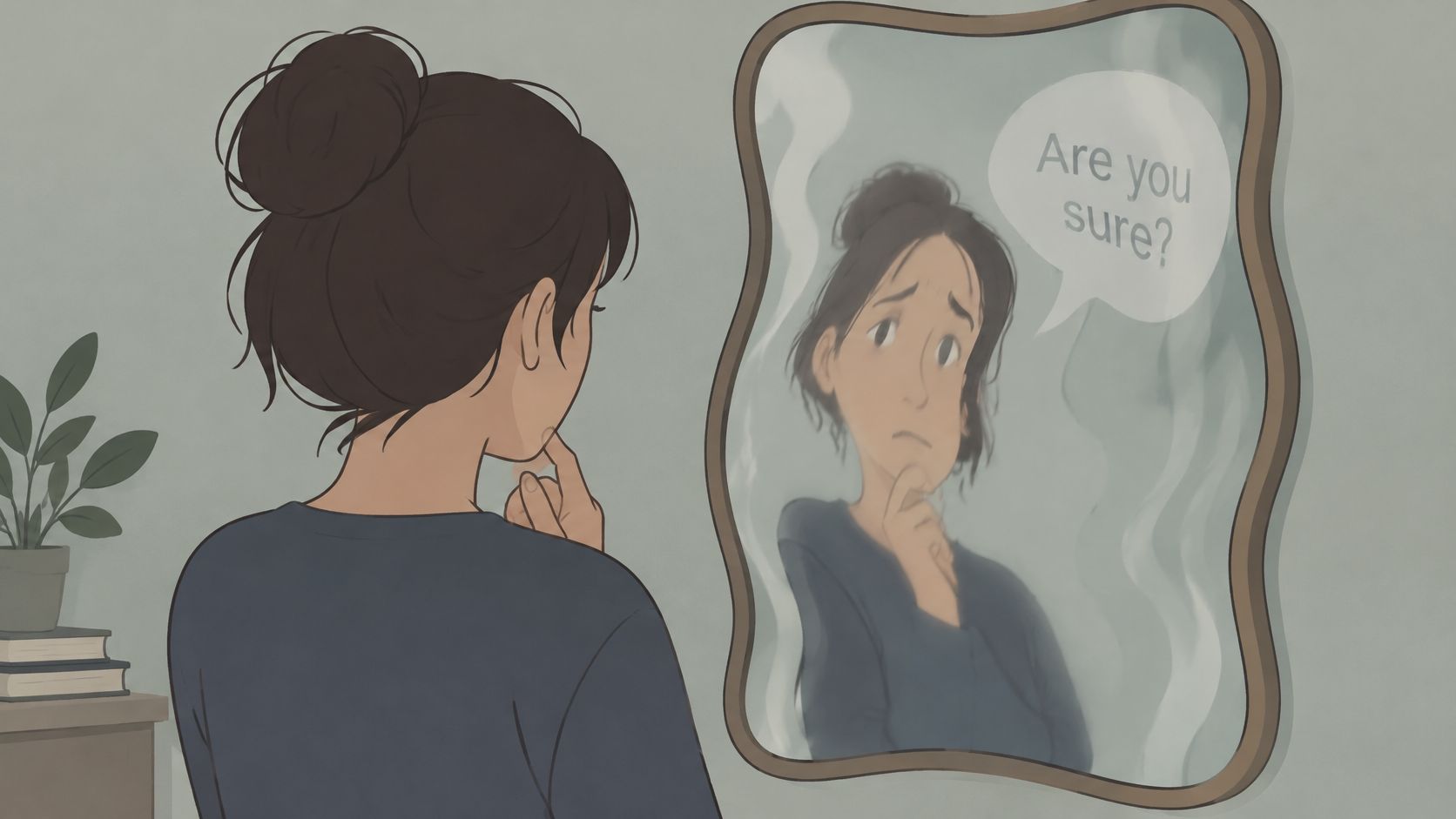
A typical scene: your partner insists they never said they'd be home by six. You show the message. They say, "You're twisting things again." Now the conversation is about your honesty instead of their absence.
ADHD makes this dynamic especially confusing. Working memory gaps mean you genuinely do lose track of details sometimes, and a partner who wants to win an argument can use that history against you. If you have ADHD, you may need outside records not because you're unreliable but because this pattern runs on evidence you can't be talked out of. Interviews with legal professionals published in 2025 documented substantial gaps in how systems respond to technology-enabled abuse, and also noted that digital tools can help survivors preserve evidence and connect with support (Journal of Family Violence).
Write it down while it's fresh. Save texts and keep a short dated note after significant conversations.
Notice the aftertaste. Consistent confusion, self-doubt, and anxiety after talking with this person is data, not paranoia.
Borrow someone else's eyes. Say the sequence out loud to a friend or therapist who isn't invested in the outcome.
Skip the memory contest. You don't have to win the timeline debate. "I remember it differently, and I'm not going to argue about it" is a complete response.
Gaslighting wears down mental health over time, so reaching for support isn't an overreaction. It's a reasonable response to a pattern built to make you doubt yourself.
5. Emotional Blackmail and Guilt-Based Control
Guilt isn't the problem. Guilt is information. It tells you that something you did doesn't match who you want to be, and it usually points toward repair. Emotional blackmail is different: it uses guilt, fear, or obligation to pull you away from your own judgment.
The classic lines are easy to recognize once you know them. "After everything I've done for you." "Fine, go out. Don't expect me to be here when you get back." "I guess I'll just handle everything alone, like always." Susan Forward described this pattern in her 1997 book "Emotional Blackmail," noting how threats, punishments, and guilt-based persuasion get used to override someone's choice.
Guilt as information versus guilt as a lever
The distinction is whether the choice is still yours. Declining a favor and feeling a flicker of guilt is normal. Declining a favor and then spending three hours managing someone else's distress until you give in isn't a conversation anymore. It's a toll.
People who use this pattern usually aren't calculating villains. Many are anxious, afraid of being left, or raised in homes where love was conditional. That context explains the behavior without making it acceptable, and it doesn't obligate you to keep absorbing it. The World Health Organization's definition of intimate partner violence includes psychological abuse and controlling behaviors alongside physical aggression, which is a reminder that control doesn't require a raised hand (WHO violence against women fact sheet).
Keep boundaries short. "I'm not able to do that this weekend" is a complete sentence. Over-explaining invites negotiation.
Expect discomfort, not collapse. Setting a boundary will feel bad for a few minutes. That's not evidence you did it wrong.
Say the need directly if this is your pattern. "I'd really like your help on Saturday" gets further than a sigh and a closed door.
Watch what follows a clear no. Persistent pressure after a clean answer tells you more than anything said before it.
6. Excessive Monitoring, Jealousy, and Control
Jealousy is an emotion. Control is a behavior. Many people feel a flicker of insecurity when their partner spends a weekend with an old friend, and that flicker is human. Control enters when the flicker becomes a rule: the phone gets checked, the weekend gets negotiated, the friend becomes a problem.
Control restricts freedom through monitoring, isolation, or constant demands for accountability. It can look like asking for your passwords, tracking your location, calling repeatedly during a workday, discouraging time with family, or holding the only car keys and the bank card.
Where monitoring crosses a line
Technology made this faster and quieter. A review of online-harm cases identified technology-facilitated intimate partner violence in 12.3% of 4,501 cases and found a 427.3% increase during the COVID-19 period, with cyberstalking and extortion among the most common forms (PubMed review of technology-facilitated abuse). Demands for instant replies, shared account access, and location sharing are now part of the same pattern that used to look like showing up unannounced.
Teens meet these dynamics early. In the CDC's 2021 Youth Risk Behavior Survey, about 1 in 12 high-school students who had dated in the previous year reported physical dating violence and about 1 in 10 reported sexual dating violence (CDC teen dating violence data).
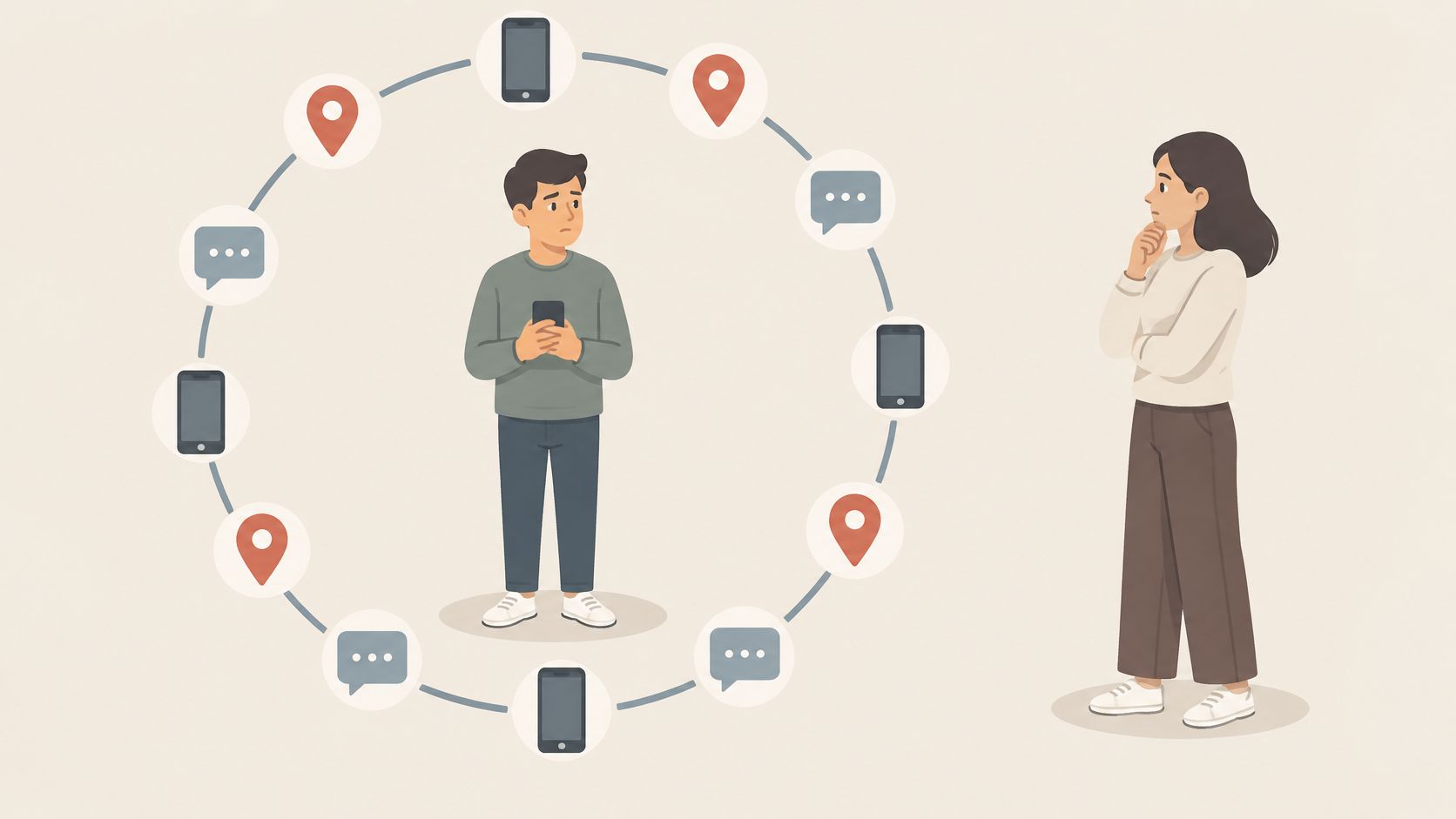
For ADHD adults, monitoring can masquerade as support. If you have a history of missed appointments and lost belongings, a certain amount of check-in can help. The tell is direction and consent: a shared calendar you both agreed to is a different thing from a location app you didn't know existed.
Worth asking yourself: does this behavior help the relationship feel safer, or does it shrink the other person's life?
Separate reassurance from surveillance. If you're driven to check, name the fear underneath: "I'm worried you're pulling away" is honest and testable. Reading their messages is neither.
Treat privacy as a norm. Time with friends and family isn't a threat to a relationship. It's part of two people having lives.
Slow the escalation. Ask for what you need directly before you ask for access.
Talk to someone if you're being monitored. A therapist or a domestic violence advocate can help you assess what's happening, especially if leaving feels complicated. If you're in relationship jealousy patterns that keep repeating, that's worth naming out loud.
7. Intermittent Reinforcement and Love-Bombing Cycles
Some relationships feel extraordinary for exactly four weeks. Then the messages slow, the warmth turns conditional, and you find yourself working to get back to the person who showed up at the start.
That sequence has a name in behavioral psychology. Unpredictable reinforcement produces stubborn behavior, which is why slot machines hold attention longer than predictable payouts. B.F. Skinner's work on schedules of reinforcement explains the pull: you keep trying because you can't predict when the warmth will return.
Why unpredictable warmth is so hard to leave
Love-bombing is the early-stage version, with intense affection, attention, and promises delivered very quickly. The National Network to End Domestic Violence lists pressuring a relationship to move very quickly among its warning signs, alongside extreme jealousy, demands that a partner stop seeing friends, frequent put-downs, blaming others for problems, and a mismatch between words and actions (NNEDV).
The pattern tends to start young. The World Health Organization reported that about 1 in 4 young women aged 15 to 24 who had been in a relationship had already experienced intimate partner violence by their mid-twenties (WHO, 2021).
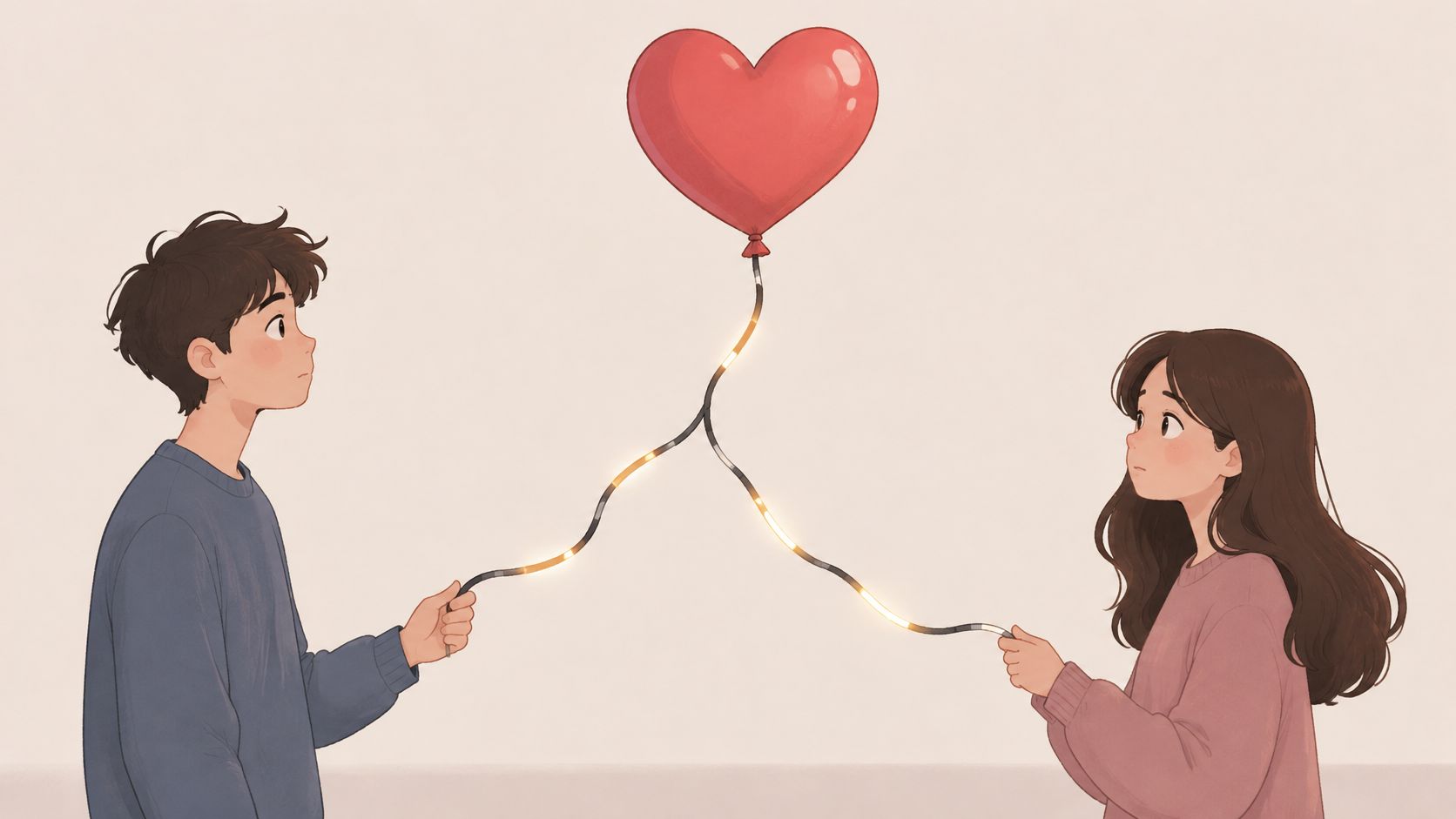
For ADHD brains, the highs in this cycle are especially seductive. Novelty and intensity register fast, and if boredom has been a problem in past relationships, the dramatic arc can feel like chemistry rather than instability.
Watch the pace. Fast intimacy isn't proof of love. It's a reason to slow down and observe consistency for a few months.
Notice the in-between. Persistent anxiety or self-doubt between the good moments is a more reliable signal than the highs themselves.
Test whether warmth is conditional. Healthy affection doesn't have to be earned back after a disagreement.
Look at what follows a no. Pressure, coldness, or punishment after a boundary is the cycle showing its mechanics.
If you want a plain-language walkthrough of how this cycle hooks people, this short video is a good place to start.
If you keep finding yourself in this loop, the useful question isn't "why did I stay" but "what made the intermittent version feel like home." That's the work of breaking relationship patterns, and it's slower and more interesting than a red-flag checklist.
8. Chronic Invalidation and Minimizing Feelings
Invalidation is the quiet one. Nobody remembers the sentence, but the accumulation is what people bring into therapy years later: "It's not a big deal." "You're overreacting." "Other people have it harder." "Just stop worrying, it's not that deep."
Occasional invalidation happens in every relationship. You're tired, you're distracted, and you say the wrong thing to your partner's hard news. The pattern turns toxic when dismissal is the default response and the other person learns, over and over, that their emotional life is an inconvenience.
Validation doesn't mean agreement
Marsha Linehan, who developed Dialectical Behavior Therapy, described invalidation as a key factor in emotional difficulty: when someone's inner experience is consistently dismissed, they often stop trusting their own emotional responses altogether. That's the long-term cost, not just a hurt feeling on a Tuesday.
The health stakes aren't abstract. The World Health Organization reports that intimate partner violence is associated with a twofold increased likelihood of depression and alcohol-use disorder and a 4.5-fold increase in attempted suicide, along with post-traumatic stress disorder, sleep difficulties, and eating disorders (WHO report on intimate partner violence).
Rejection sensitivity makes invalidation expensive for ADHD adults, because being told you're too much tends to pair with a lifetime of similar messages. Emotional flooding works the other way too: by the time your feelings are big, you may be too overwhelmed to explain them clearly, which makes it easier for a partner to write them off.
Validate before you solve. "That sounds frustrating" often matters more than the fix you're reaching for.
Catch your reflexive phrases. "At least" and "just" are the two words that most often signal a dismissal in progress.
Answer with curiosity. "Tell me more about what felt hardest" does more than a well-argued counterpoint.
Rebuild trust in your own reactions. If you're often invalidated, noticing how it affects your confidence is the first step, and a therapist can help you check your read on things against someone outside the dynamic.
8 Toxic Relationship Behaviors at a Glance
Behavior | Core Pattern | How It Feels to the Other Person | First Constructive Step |
|---|---|---|---|
Chronic Criticism and Contempt | Attacking character through insults, sarcasm, mockery, or superiority | Fundamentally unacceptable and unable to meet expectations | Replace global labels with a specific observation and a clear request |
Defensiveness and Blame-Shifting | Deflecting concerns with excuses, counterattacks, or shifted responsibility | Unheard, dismissed, and unable to resolve the original issue | Acknowledge the concern and consider what part may be accurate |
Stonewalling and Emotional Withdrawal | Shutting down or withdrawing without agreeing to return to the conversation | Abandoned, anxious, and left without resolution | Name the need for a break and set a specific time to resume the discussion |
Gaslighting and Reality Distortion | Repeatedly denying or reframing events so the other person doubts their memory or judgment | Confused, anxious, and unsure what is real | Record important conversations and seek perspective from someone trusted |
Emotional Blackmail and Guilt-Based Control | Using fear, guilt, or obligation to override another person's choices | Pressured and responsible for the other person's emotions | State a clear boundary without over-explaining |
Excessive Monitoring, Jealousy, and Control | Restricting privacy or independence through surveillance, isolation, or demands | Watched, constrained, and cut off from others | Name the anxiety directly and agree on fair, mutual check-ins |
Intermittent Reinforcement and Love-Bombing Cycles | Alternating intense affection with withdrawal, coldness, or criticism | Anxious, unsettled, and trying to earn back warmth | Slow the pace and pay attention to consistency over time |
Chronic Invalidation and Minimizing Feelings | Dismissing, minimizing, or criticizing another person's emotions | Unimportant, misunderstood, and doubtful of their own reactions | Acknowledge the feeling before offering advice or solutions |
Patterns Are Learnable and Changeable
The line between a rough patch and a toxic dynamic is repetition. Every pattern here has an ordinary version that shows up in good relationships during hard months, and a repeating version that changes who you become. Naming which one you're dealing with is useful work, and it isn't a verdict on your partner or a moral failure on your part.
Recognition alone doesn't fix much. A Cochrane review of six studies involving 3,564 participants found that screening more than doubled identification of intimate partner violence (risk ratio 2.33, 95% confidence interval 1.39 to 3.89) but found no demonstrated reduction in subsequent violence and uncertain effects on referrals (Cochrane review of screening programs). Seeing the pattern is the beginning of the work, not the end of it.
What tends to help, in order:
Get specific. "He's toxic" gives you nothing to work with. "He checks my phone and tells me my friends are a bad influence" gives you something you can describe, track, and respond to.
Record rather than rehearse. A few dated notes make it much harder to talk yourself out of what you've noticed.
Slow the reaction. Most patterns run on speed: the fast defense, the quick shutdown, the immediate guilt response. An announced pause is often enough to change the loop.
Borrow perspective. A friend, a therapist, or both. Someone outside the dynamic can see what familiarity has made invisible.
Therapy helps in a specific way. It's a place where the pattern gets to show up in the room with someone who isn't caught inside it. For relationships, that means slowing down what's happening, understanding the part you play in it, and practicing a different response before you need it under pressure. Sometimes the work starts with understanding yourself first.
Nick Donahue LICSW works with teens and adults in Washington, D.C. on relationship difficulties, emotional regulation, and ADHD-related patterns, in person in D.C. and virtually for clients in D.C. and Virginia, with 60-minute sessions that leave room to slow a dynamic down rather than skim it.
You don't need a label to start, and you don't need to have decided anything about the relationship. You need enough clarity to see the pattern and enough support to try something different. If any of these eight behaviors felt familiar, that recognition is a reasonable place to begin.
Individual therapy at Nick Donahue LICSW is built for exactly this kind of work: noticing recurring relationship patterns, understanding how ADHD and emotional regulation shape them, and practicing responses that hold up outside the session. Sessions run 60 minutes, in person in Washington, D.C. or virtually for clients in D.C. and Virginia, with room to think out loud without needing a diagnosis to start. Visit Nick Donahue LICSW to learn more and request an initial consultation.
Comments