
Emotional Regulation for Teens: Skills That Actually Work
A teen can be sitting in class with a knot in their stomach, staring at a quiz, a phone buzzing in their pocket, and one bad text from a friend can make the whole day feel like a collapse. Another teen walks into the kitchen after practice, hears one sharp comment from a parent, and suddenly wants to shut down or explode. A third keeps checking social media, feels worse after every scroll, and can't tell whether the app is soothing stress or feeding it.
That's where emotional regulation for teens starts to matter in a very real way. Emotional distress is common in adolescence, and the numbers reflect that this is not a rare problem. The World Health Organization estimates that 1 in 7 young people ages 10 to 19, about 14.3%, experiences a mental-health condition, and those conditions account for about 15% of the global disease burden in that age group, with anxiety and depression especially relevant to regulation struggles CDC data on adolescent mental health. In the United States, the CDC found that 40% of high-school students reported persistent sadness or hopelessness in 2023, and 20% of adolescents ages 12 to 17 reported recent anxiety symptoms across 2021 to 2023 CDC data on adolescent mental health.
Big feelings don't mean a teen is broken. They mean the nervous system is getting challenged by school pressure, relationships, identity shifts, family stress, and digital life all at once. Practical skills help, but only when they match the problem in front of the teen.
Table of Contents
Learning to Name What You Feel - Start with the body, not the story - Separate the first feeling from the reaction
Skills to Tolerate and Shift Strong Emotions - Grounding first, thinking later - Shift attention without pretending the problem is gone
Deciding Between Managing the Moment and Changing the Context - State regulation handles the surge - System regulation changes what keeps setting off the alarm
Navigating School Stress and Relationship Challenges - School pressure without shutdown - Friends, dating, and family tension
Putting It All Together and Knowing When to Get Help - When self-help is not enough
When Big Feelings Take Over
A teen can look fine and still be overloaded. After school, hunger, noise, pressure, and a tense message can stack up fast, and the reaction often shows up before the teen can sort out why.
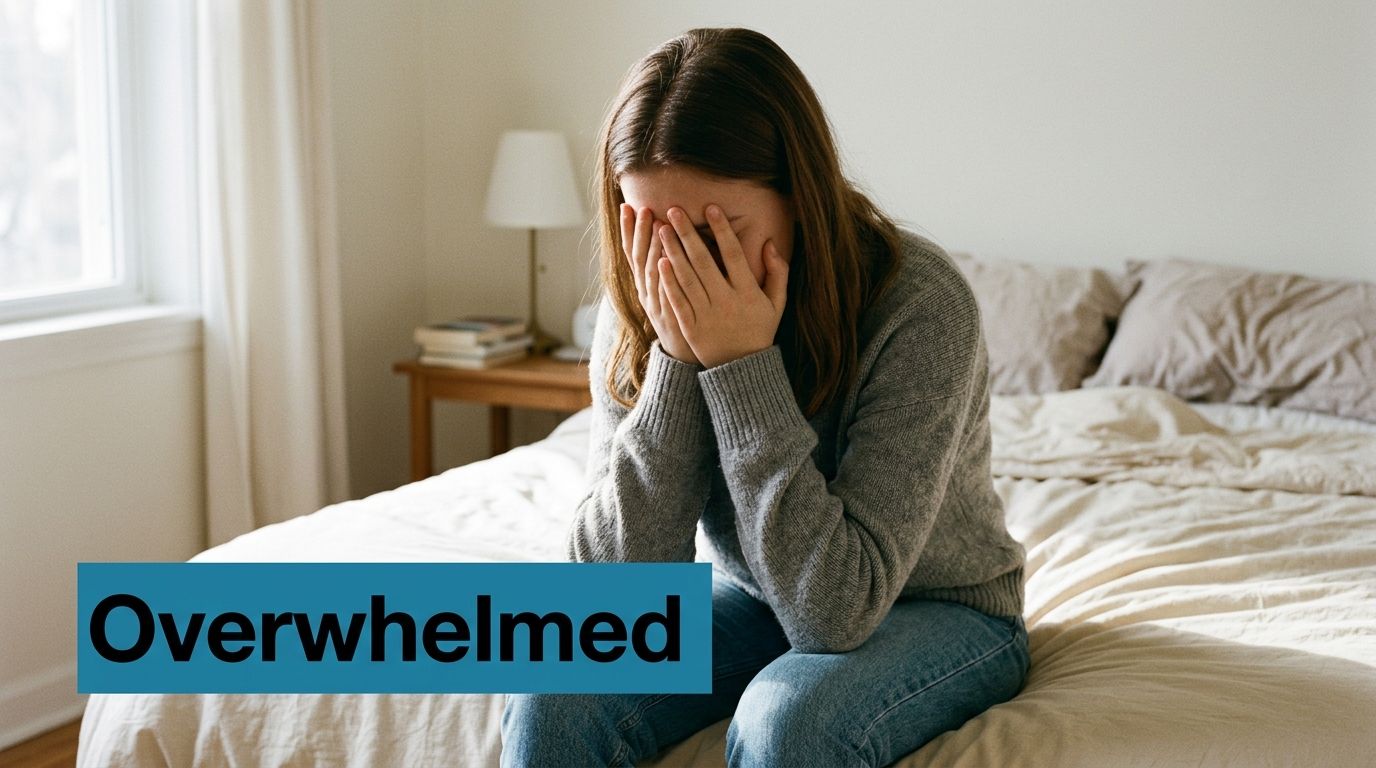
Why the reaction feels so big
Adolescence brings rapid emotional change, and that is not just “teen drama.” The WHO identifies emotional regulation as a foundational adolescent mental-health skill WHO adolescent mental health fact sheet. Distress in this stage can show up as anxiety, sadness, irritability, impulsivity, or emotional overwhelm.
Practical rule: when the feeling is intense, the first job is not to fix it. The first job is to figure out what kind of state the teen is in and what set it off.
That distinction matters. State regulation is what you do during the surge, slowing the body, lowering intensity, and creating enough space to think. System regulation changes the conditions that keep pushing the teen into overload, like sleep, expectations, routines, sensory load, or support at home and school.
A teen who snaps after school may not need a lecture about attitude. They may be depleted, hungry, overstimulated, or carrying the day home in their body. A teen who panics after seeing a text from someone they like may need help settling their nervous system before they can make sense of the feeling.
The point is practical. Big feelings are often a mismatch between demand and capacity, not a character flaw. When the response fits the moment, teens stop treating every surge of emotion like proof that something is wrong with them.
Learning to Name What You Feel
A teen can't regulate an emotion they can't identify. That sounds obvious, but many teens go straight from “I feel awful” to action, which means the feeling runs the day before it gets named. The more precise the label, the more options open up.
Start with the body, not the story
Before asking “What's wrong with me?”, start with “What's happening in my body?” Tight chest, clenched jaw, hot face, stomach drop, shaky hands, or a mind that won't stop spinning all point to different states. Those signals are often easier to catch than the emotion word itself.
Separate the first feeling from the reaction
Anger is sometimes a cover for hurt. Irritability after school can be depletion. Shame after a teacher's comment can hide fear of being seen as stupid. The goal is not to psychoanalyze everything, just to get curious enough to avoid mislabeling the moment.
A simple emotion check can look like this:
Spot the signal: notice the body cue, such as tension, heat, or numbness.
Find the word: choose the closest emotion, even if it's imperfect.
Check the trigger: ask what happened right before the feeling shifted.
Notice the need: look for what the emotion is asking for, such as rest, space, reassurance, or support.
The best label is usually the one that reduces confusion. If a teen says “I'm angry,” but the body looks more like panic, the regulation strategy will be off. If the actual feeling is embarrassment after a friend jokes in front of others, the teen may need repair, not just calming.
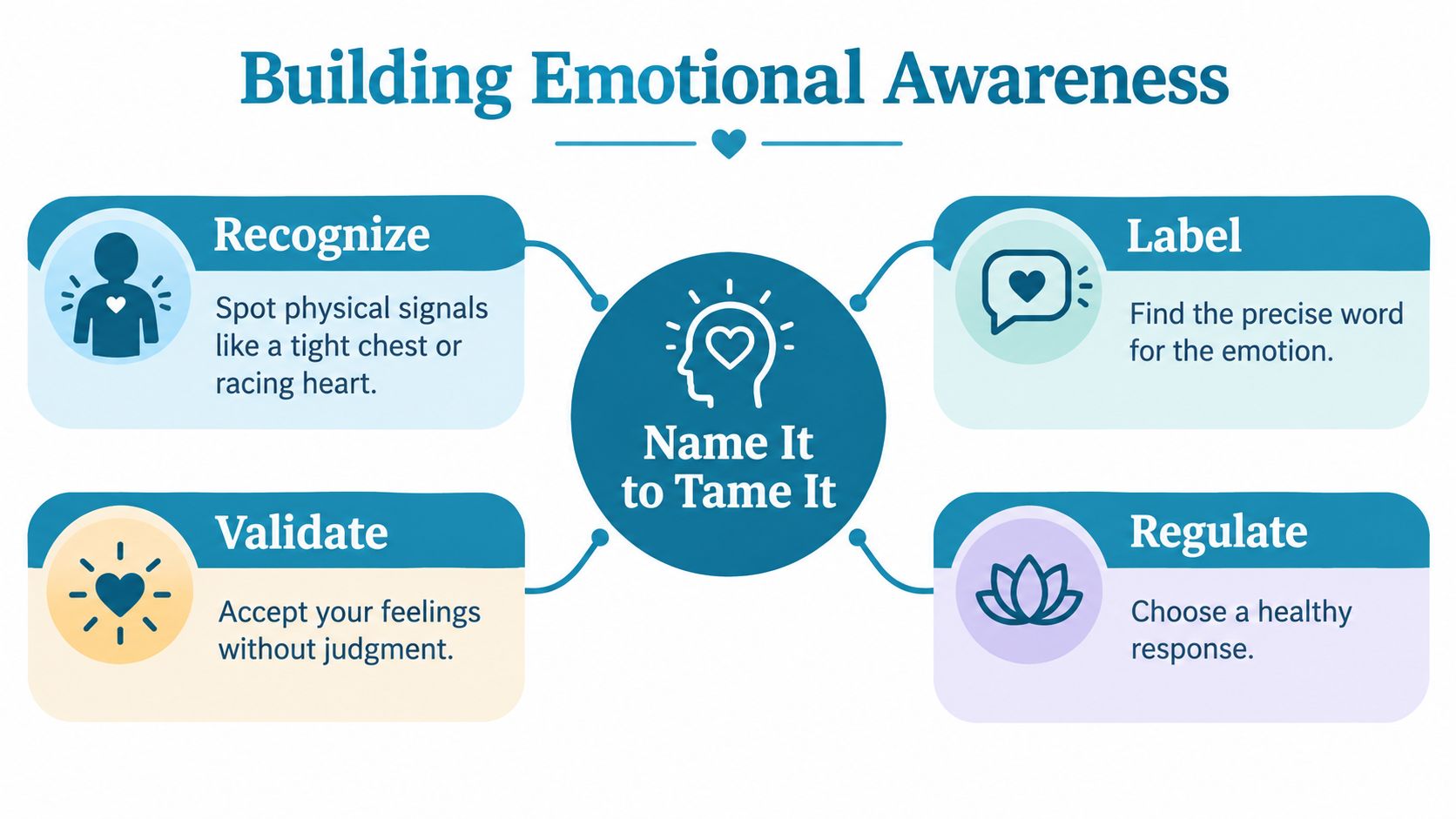
Validation matters here too. Naming a feeling doesn't excuse every reaction, but it does reduce the fight against reality. A teen who can say “I'm embarrassed and I want to disappear” has already moved closer to regulation than a teen who only knows something feels wrong.
Skills to Tolerate and Shift Strong Emotions
Once a teen can name the emotion, the next move is choosing a tool that actually changes the state. Not every tool works for every nervous system, and the trick is to keep the method simple enough to use when the mind is crowded. The goal is not to become calm instantly, it's to make the next decision less reactive.

Grounding first, thinking later
Grounding works best when emotions are loud and logic is offline. The classic 5-4-3-2-1 method is useful because it forces attention outward, toward what can be seen, touched, heard, smelled, and tasted. A teen can use it in a bathroom stall before class, in a hallway after an argument, or in a car while waiting to be picked up.
Breathing helps, but it needs to be practical. Slow exhale-based breathing often works better than dramatic deep breaths, because the goal is to signal safety to a system that thinks something urgent is happening. A few slow breaths before opening a difficult text thread can change the next response from impulsive to intentional.
A short sequence can look like this:
Pause and plant both feet.
Name the feeling without judging it.
Lengthen the exhale.
Choose one next action, not ten.
Cognitive reframing matters too, but only if it stays simple. “They didn't text back” can become “I don't have enough data yet,” which is more usable than a polished pep talk. A teen spiraling after seeing a post online may not need positive thinking. They may need a more accurate thought.
What changes the moment is not a perfect insight. It's a small interruption that keeps the feeling from deciding everything.
Shift attention without pretending the problem is gone
Distraction has a bad reputation, but strategic attention-shifting is a valid regulation tool when the nervous system is overloaded. A short walk, cold water on the face, a quick puzzle, or putting on headphones can give the brain enough distance to stop escalating. That's different from avoidance, which is what happens when the teen keeps running from the same problem every day.
The key trade-off is this. A teen who is panicking before class may need immediate regulation, not a deep conversation. A teen who keeps using the same tool without ever addressing the trigger is stuck in a loop. Good regulation blends a quick reset with a later look at what keeps setting the alarm off.
For teens who want structured support around these skills, the Nick Donahue LICSW teen therapy services page is one place to look for a practical, conversation-based approach that includes coping skills, ADHD-related challenges, and emotional regulation work.
Deciding Between Managing the Moment and Changing the Context
Not every emotional surge is a skill problem. Sometimes the teen already knows how to breathe, label, and ground, but the schedule is too packed, the home situation is too tense, or the school load keeps punching through the same weak spot. That's where the distinction between state regulation and system regulation matters.
Your Situation | Try State Regulation | Try System Regulation |
|---|---|---|
One sharp emotion spike, like getting a bad text before class | Use grounding, breathing, or a short pause | Usually not the main issue |
The same feeling keeps returning every day | Helpful for the moment | Likely needs a schedule, sleep, workload, or support change |
Overwhelm after conflict, but the conflict is over | Calm the body first | Later, look at communication patterns and boundaries |
Irritability that shows up when tired, hungry, or overloaded | Good immediate reset | Adjust the routine, food, rest, or demands |
Anxiety that spikes in a specific class or social setting | Use in-the-moment coping | Review the setting, expectations, and support options |
State regulation handles the surge
State regulation is what a teen does during the emotional wave. That includes grounding, breathing, moving the body, stepping away briefly, or asking for a minute. It's the right choice when the teen needs to keep functioning right now.
System regulation changes what keeps setting off the alarm
System regulation means changing routines, expectations, supports, and relationships so the same surge doesn't keep happening. That might mean getting more sleep, reducing overload, asking for assignment clarification, changing how conflict gets handled at home, or building in recovery time after school. For teens with ADHD, that distinction matters a lot, because an overloaded system can make “just calm down” useless.
If the same emotion keeps returning, the environment deserves attention too.
This is also where people make a common mistake. They treat every emotional struggle as if better character would solve it. That framing misses the fact that ongoing bullying, academic overload, family conflict, sleep disruption, neurodevelopmental differences, and substance use can make regulation much harder than it should be.
When the problem is chronic, the teen needs both skill and support. The skill helps with the moment. The support changes the pattern.
Navigating School Stress and Relationship Challenges
School stress shows up fast. A teen can seem fine, then feel flooded after a low grade, public feedback, or a late assignment notice. Relationships can trigger the same surge even faster, because belonging, status, and attachment are all on the line.
School pressure without shutdown
Before an exam, state regulation may mean a short breathing reset, a reminder to focus on the next question rather than the whole test, and a quick check for catastrophic thinking. During a large assignment, system regulation is often the better move. Break the work into smaller parts, ask for clarification, and do not wait until panic is already driving the process.
Teacher feedback can sting even when it is meant to help. A teen who hears “this needs more work” and immediately thinks “I'm failing” is usually reacting to shame as much as to the assignment itself. In that moment, the job is to separate performance feedback from identity.
For teens who need a structured place to work on these patterns, the Nick Donahue LICSW services page outlines therapy for ADHD, anxiety, emotional regulation, relationships, and life transitions. That kind of support fits school stress that keeps repeating.
Friends, dating, and family tension
Friend conflict often gets worse when a teen tries to solve it while flooded. A calmer response is to pause, identify the specific trigger, and decide whether the issue is misunderstanding, boundary setting, or repair. Dating stress can feel even sharper, because rejection lands harder when the connection matters.
Family tension usually needs both a momentary reset and a longer-term plan. A teen can step away before yelling, but if the same conversations always blow up, the family system may need different timing, clearer rules, or outside support. A tense home is not a character test. It is a real environment that makes regulation harder.
Social media adds another layer because the platform itself carries emotional cues. A recent systematic review found only 6 eligible studies out of 9,049 records on self-directed digital emotion-regulation interventions for adolescents, covering 1,271 young people, which shows how limited the evidence still is on what helps online systematic review on digital emotion regulation. The same review reports a school-based trial with 636 adolescents that found mixed effects from affective social-media literacy, with some short-term negatives but a later gain in connectedness. That makes digital regulation harder than “log off.”
That trade-off matters. Scrolling can calm a teen for a minute, then sharpen comparison, conflict, or fear of missing out. Teens need to ask what the app is doing to their mood, not just how long they have been on it.
Putting It All Together and Knowing When to Get Help
A teen in the middle of a blowup does not need a lecture on character. They need a sequence that fits the moment. Notice the feeling, name it, lower the surge enough to think, then decide whether the next move is a quick reset or a change to the routine, demand, or support around them. That split matters. State regulation handles the emotion surge. System regulation changes the conditions that keep setting it off.
The evidence supports that practical approach. A 2022 systematic review of 33 rigorous studies on early adolescents found that self-regulation programs had a small overall effect, while emotion-focused programs did better, with Hedges' g = 0.20 for the emotion regulation programs 2022 systematic review of adolescent self-regulation programs. A 2024 meta-analysis of 40 interventions from 35 publications involving 3,891 children and young people found Cohen's d of 0.37 with a 95% confidence interval from 0.22 to 0.51 and p < .001 2024 meta-analysis of emotion regulation interventions. The takeaway is simple, these skills help, but they tend to work through steady practice, not instant change.
When self-help is not enough
Some problems call for more than coping skills. Persistent sadness, ongoing anxiety, repeated shutdowns, risky behavior, self-harm thoughts, panic that keeps interfering with school or relationships, or a pattern that does not improve with practice all point to the need for professional help. That is not failure. It usually means the teen's current tools and environment are not enough on their own.
Good therapy does more than tell teens to calm down. A good therapist helps them spot triggers, build language for feelings, practice state regulation skills, and make system changes that fit real life. If you want support from a licensed clinician, Nick Donahue LICSW contact information is one option for individual therapy focused on teens, ADHD, anxiety, relationships, and life transitions.
The next step does not have to be dramatic. A teen can start with one feeling word, one calming strategy, and one pattern to watch this week. If overwhelm keeps returning, the right move may be more support, not more self-criticism.
If emotions are interfering with school, sleep, friendships, or family life, therapy can make the work feel less isolating and more practical. A conversation with a licensed clinician can help sort out what is a momentary surge, what is a recurring pattern, and what kind of support fits.
Composed with the Outrank app
Comments